Building Payment products at Runa
Industry
Fintech Payments
The team
Lead Product Designer (me), Lead Product Manager, Engineering Manager
My role
I led design across the discovery, prioritisation, and delivery phases, including:
- Facilitated workshops to evaluate payment options
- Defined design priorities (Authentication, KYC, Branding, Support)
- Prototyped and tested flows with global users
- Created scalable documentation (API design, CX playbooks)
- Partnered with PM/Engineering to move from concept → launch in 6 weeks
User Impact
- Access to a new products - Runa being able to provide new product types to our customers means that their users benefit from new ways to receive digital value.
- Increased security - We took a step back and decided to really look at how secure our payout offerings were. With an added Authentication step, we have increased security and confidence in our products.
- Added flexibility if gift cards fail - With new payment products, if a gift card processor is down for some reason, we could now offer them a FIAT alternative if they don’t want to wait for the product to be live again.
Business Impact
- Increased revenue - In the first quarter of having reloadable prepaid cards live, we have issued over 100,000 cards with an estimated revenue of ~$600,000 per year.
- Massively increased pipeline - With the new product offering, our sales pipeline has massively increased to over $1 billion that Runa will try to capitalise on in 2026.
- Increased speed to launch new payment products - Building out our first payment flow in a way where we could leverage existing design components and flows meant Runa could fast follow this project by adding new types of payment products.
The Challenge
Runa is a B2B2C fintech looking to build the next-gen global network, allowing businesses to pay, reward and send digital value anywhere in the world as easily as sending a message. Runa started off mainly in gift cards and it’s network of gift card merchants worldwide is it’s biggest USP.
As Runa has moved beyond gift cards and into offering new forms of digital value, our teams challenge was to look at the different routes Runa could take into payments, a $3T market we could not yet serve.
Our goal: launch a new payment product in just 6 weeks to prove Runa could go beyond gift cards, while ensuring security, compliance, and a seamless user experience.
Research & Discovery
Understanding User Trust in Payments
As we were new to the payments industry, the first step was to conduct some secondary research and some larger quantitative surveys sio we could try and understand trends around how users prefer to send and receive money.
Some of the key things we wanted to learn were focused around:
- How comfortable users were sharing bank details online
- Preferences for instant payout methods vs. waiting for payments
- Confidence factors when handling money digitally
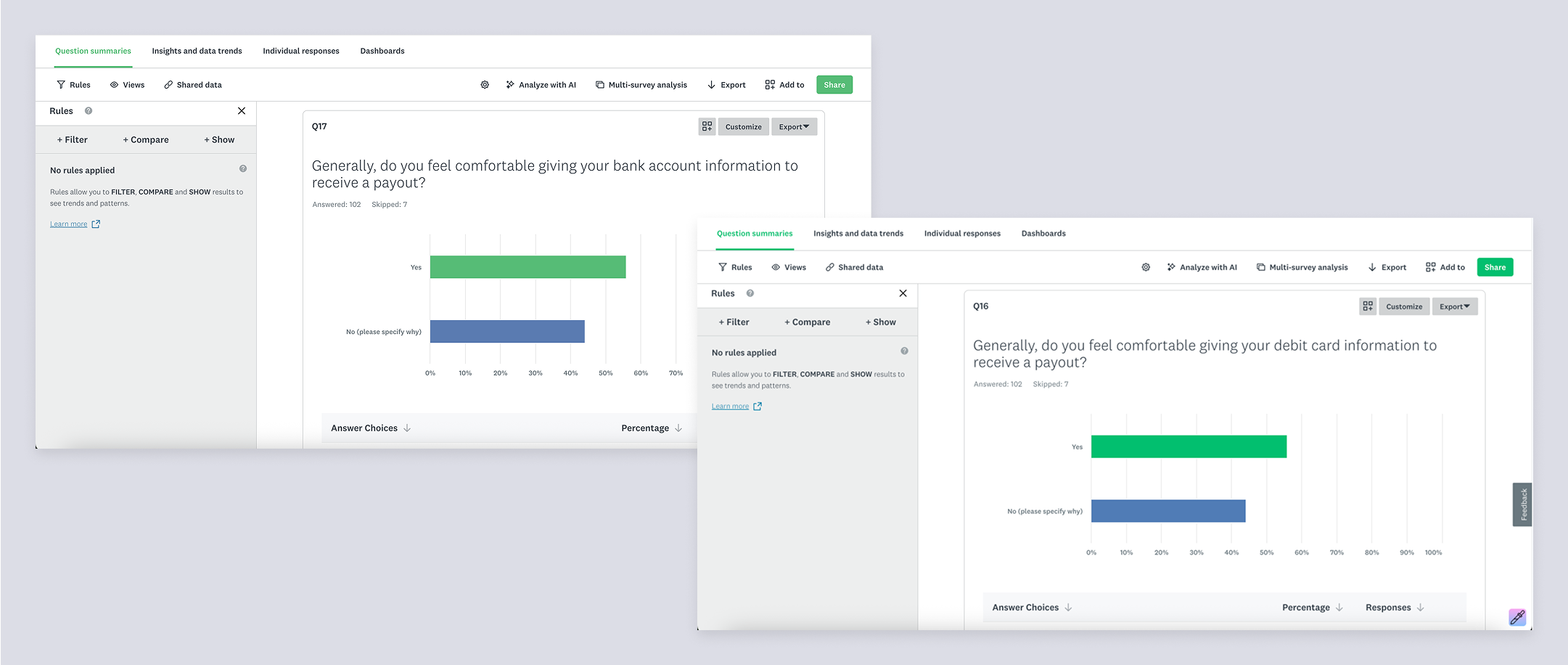
Quantitative survey findings
Stakeholder Workshops
I facilitated workshops with PM, Engineering, Sales, and CX to assess two potential first products:
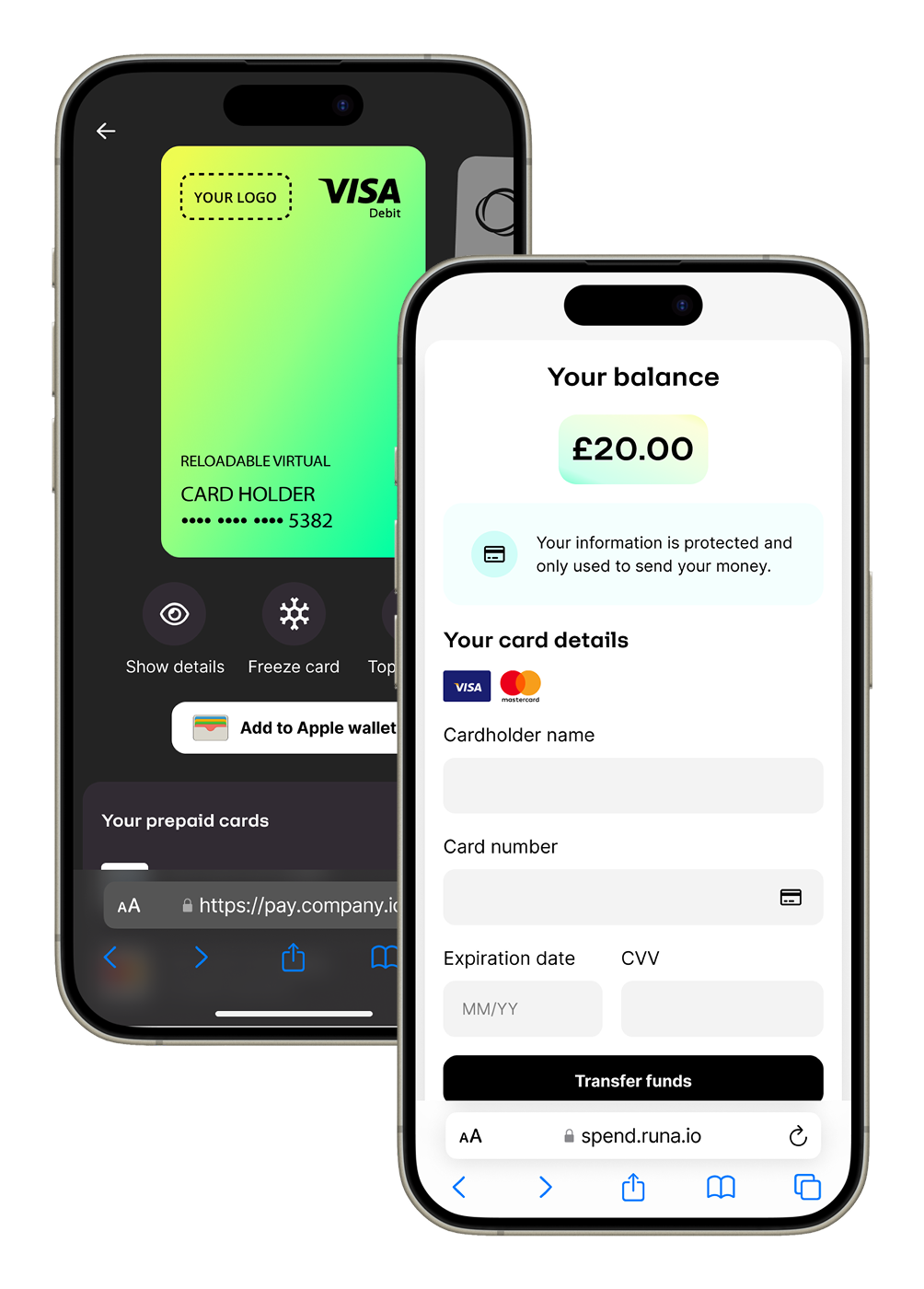
1. Reloadable Prepaid Debit Cards - These are reloadable virtual cards that a customer can send to their user to use day to day. These cards would also give customers flexibility to issue cards with different spending rules, such as limiting where the card can be used and what it can be used to purchase.
2. Pay to Debit Card - This option is focused on customers sending FIAT directly to users bank accounts, using their debit card details to route the payment. This option is more limited in it’s features, but allows customers to send money in a compliant way.
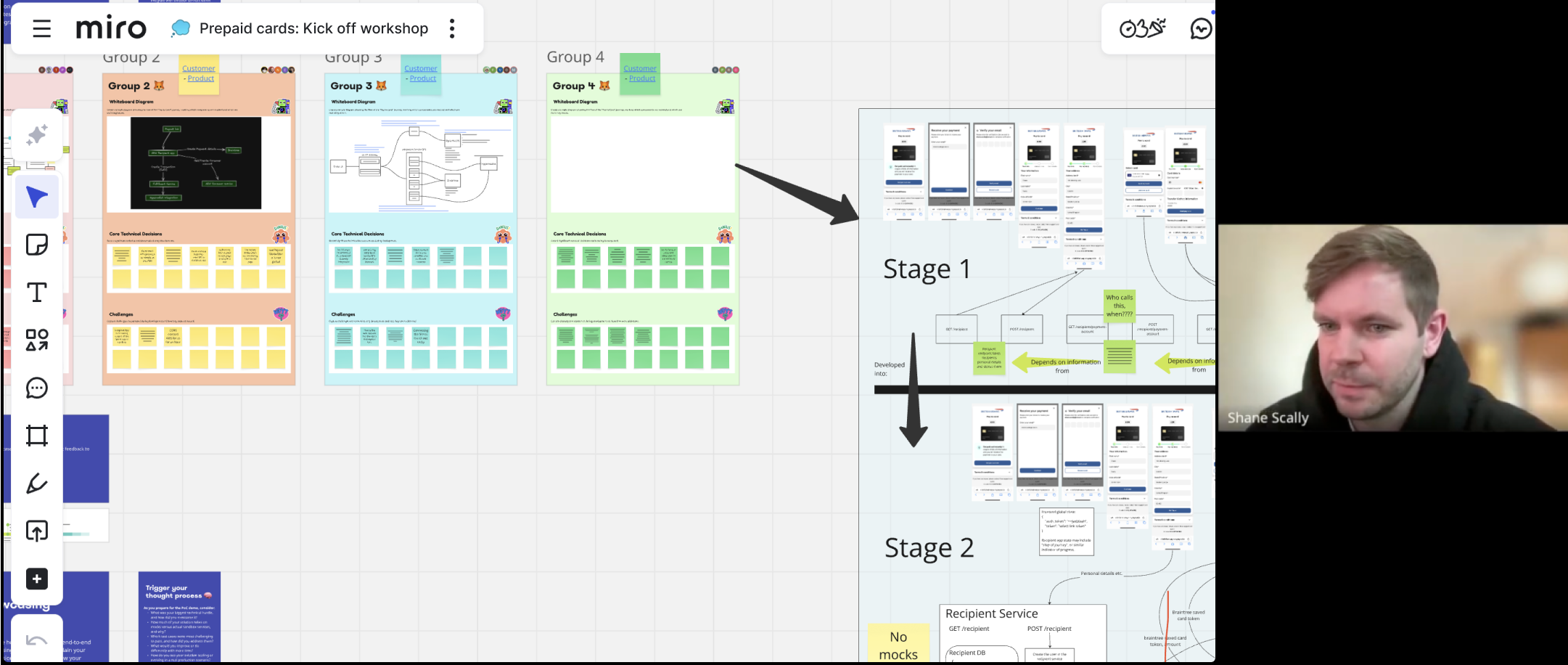
Kick off workshop
A number of different criteria were considered such as development time, regulatory constraints, customer and user experience, existing customers potential to adopt early and sales pipeline.
Prioritisation Plan
Based on feedback from internal stakeholders as well as potential future users, I worked alongside Product to evaluate each potential first step using the RICE scoring framework.
Our recommendation was to first go with Reloadable Prepaid Cards, and later follow with the Pay to Card FIAT disbursements. This was mainly due to our confidence to execute quickly with the chosen reloadable prepaid provider, and also the willingness for existing customers to start using the product at launch (we already had some single use prepaid Visa cards on our Network which had good rates of usage).
Key areas for design
Authentication
Previously to releasing payment product offerings, Runa did not offer any products where a user could return and reuse some details they have provided before, every product was essentially single use. This meant for payment products such as prepaid cards which could be reloaded, we needed to build the concept of users being first class citizens in our platform. This required users to authenticate themselves to use these products.
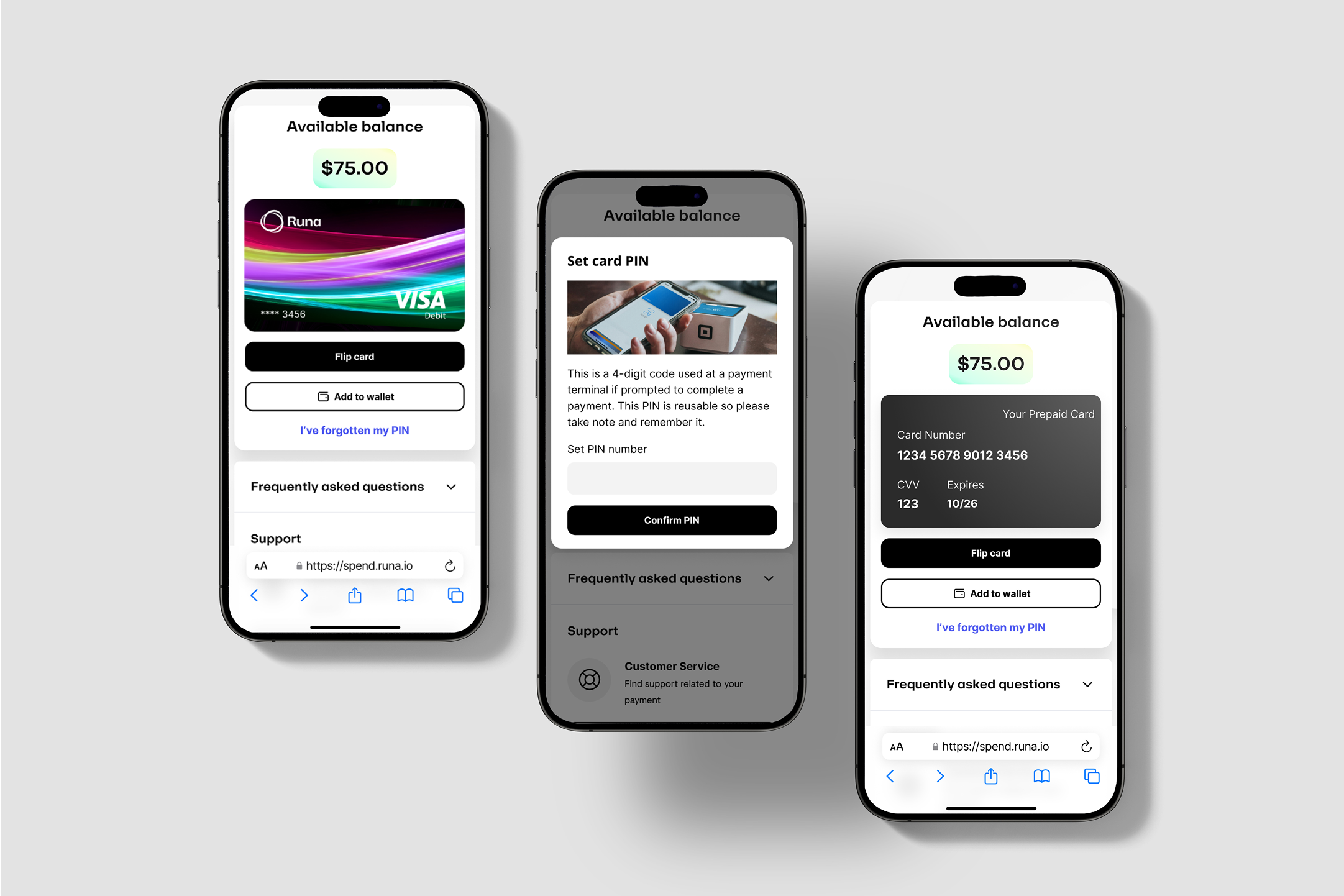
I designed and tested a reusable user identity system that would balance speed and flexibility with security and trust.
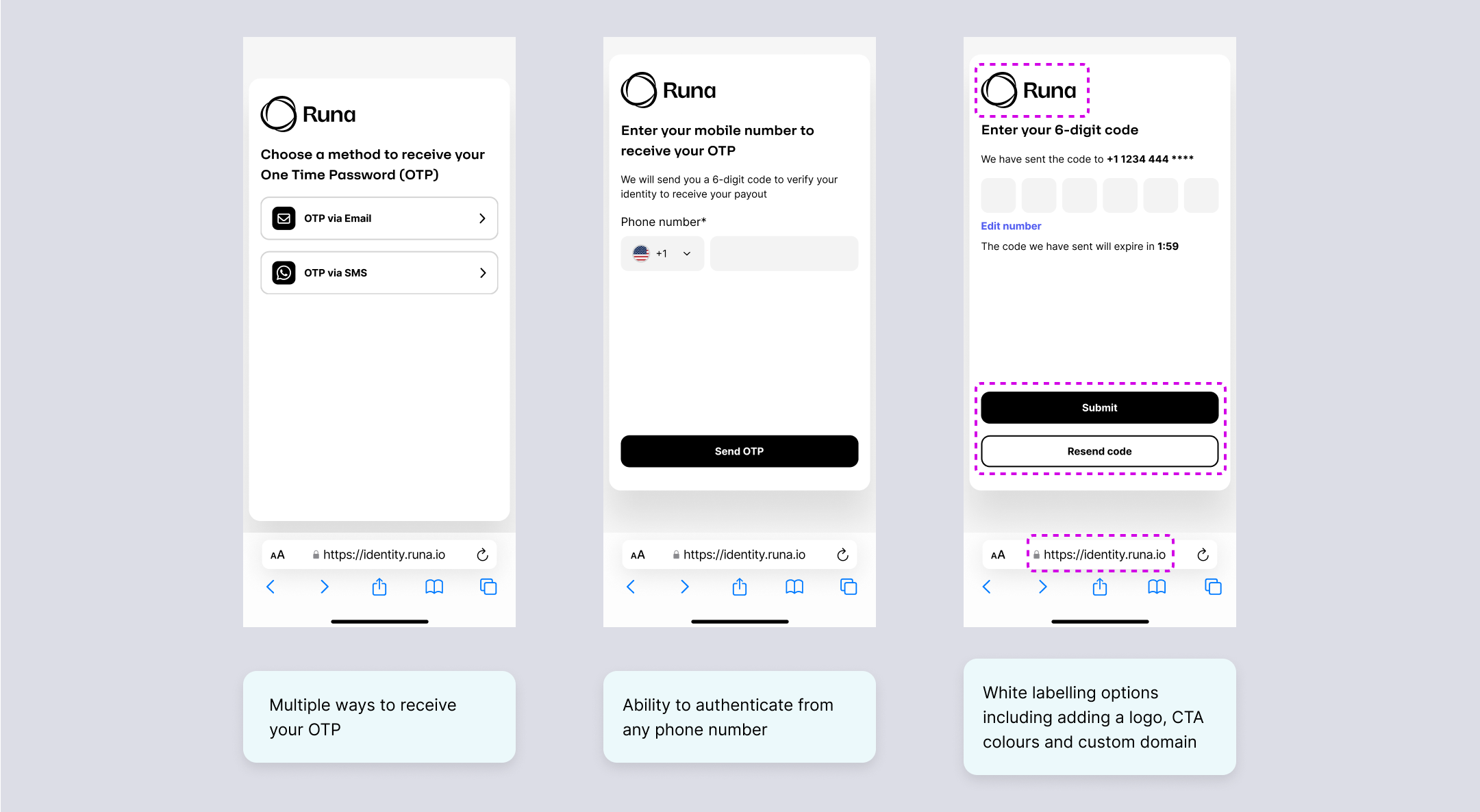
Authentication features
KYC Checks
Since this product could be used globally, I focused heavily on testing different approaches to address collection across regions, running rapid experiments through UserTesting.com. I tested flows with both address lookups and manual address inputs in different key regions, and asked users about their experiences and feelings using each type of lookup in the past.
Because of this, the final design was to lead with postcode/zipcode lookups where possible, and any region where a lookup was not available or there was a perceived lack of confidence in the result, we would default to a manual address lookup.
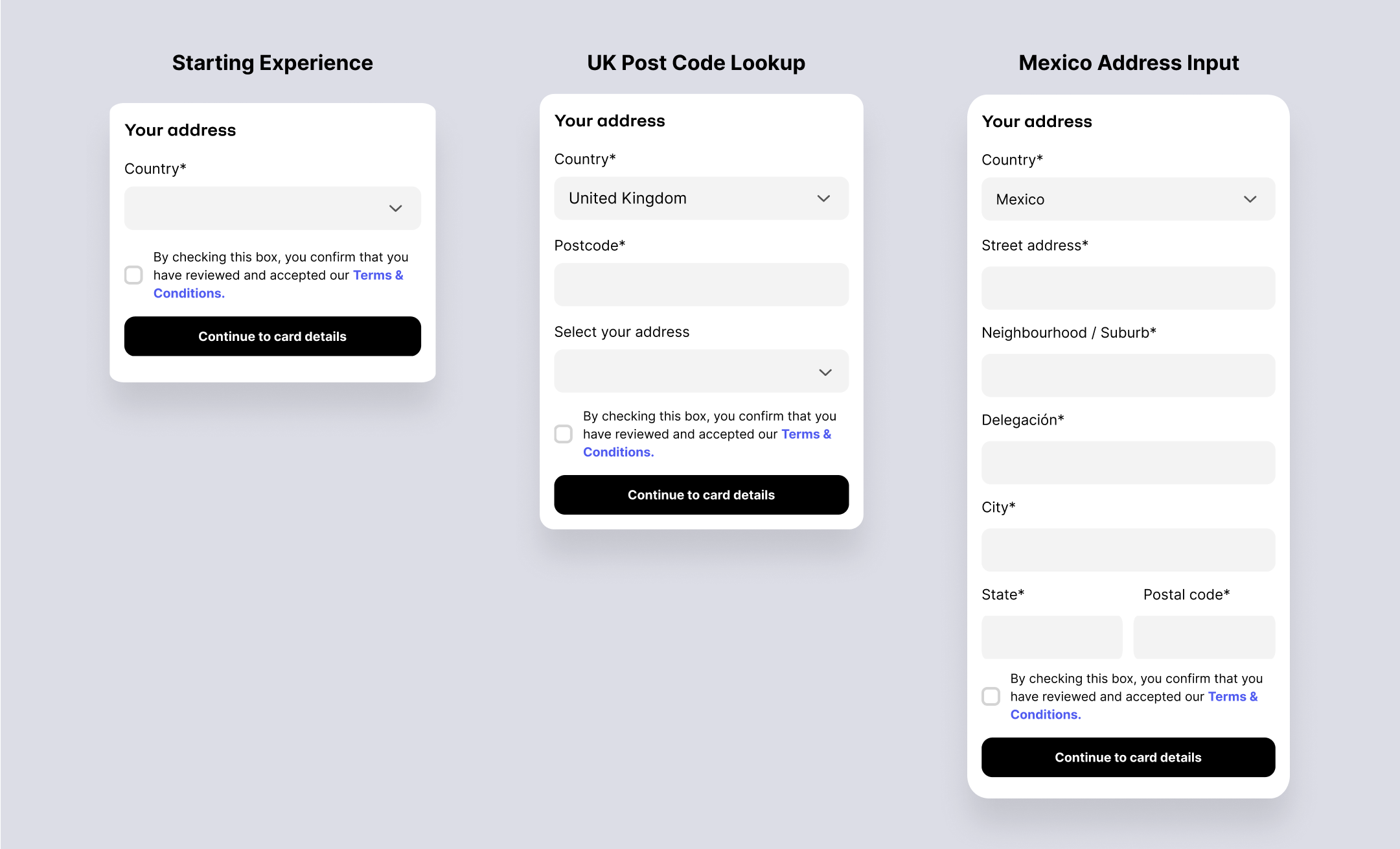
Address input by country
Transactional Microinteractions
Early user testing revealed that the point at which users were asked to enter their card details was the most sensitive and trust-critical moment in the payout journey.
To address this, we integrated a card BIN checker API that provided real-time feedback on the card being used, helping users quickly validate their details, increasing confidence, and reducing input errors.
For banks where we had historical transaction data, we further enhanced the experience by displaying an estimated payout arrival time, setting clearer expectations and reinforcing trust at a crucial stage of the flow.
Card Customisation
From research, one of the most important aspects of running a card program for customers was being able to brand their virtual cards, and offer their users as much of a white-labelled experience as possible.
During the design process I focused a lot on what elements of the journey could be branded, and tried to ensure that a customers branding would receive prominence at key parts of the journey. As well as this, I also designed some white-labelling guidelines for our API documentation and provided customers with a portal where they could securely upload their brand assets.
Card Onboarding Program - Link
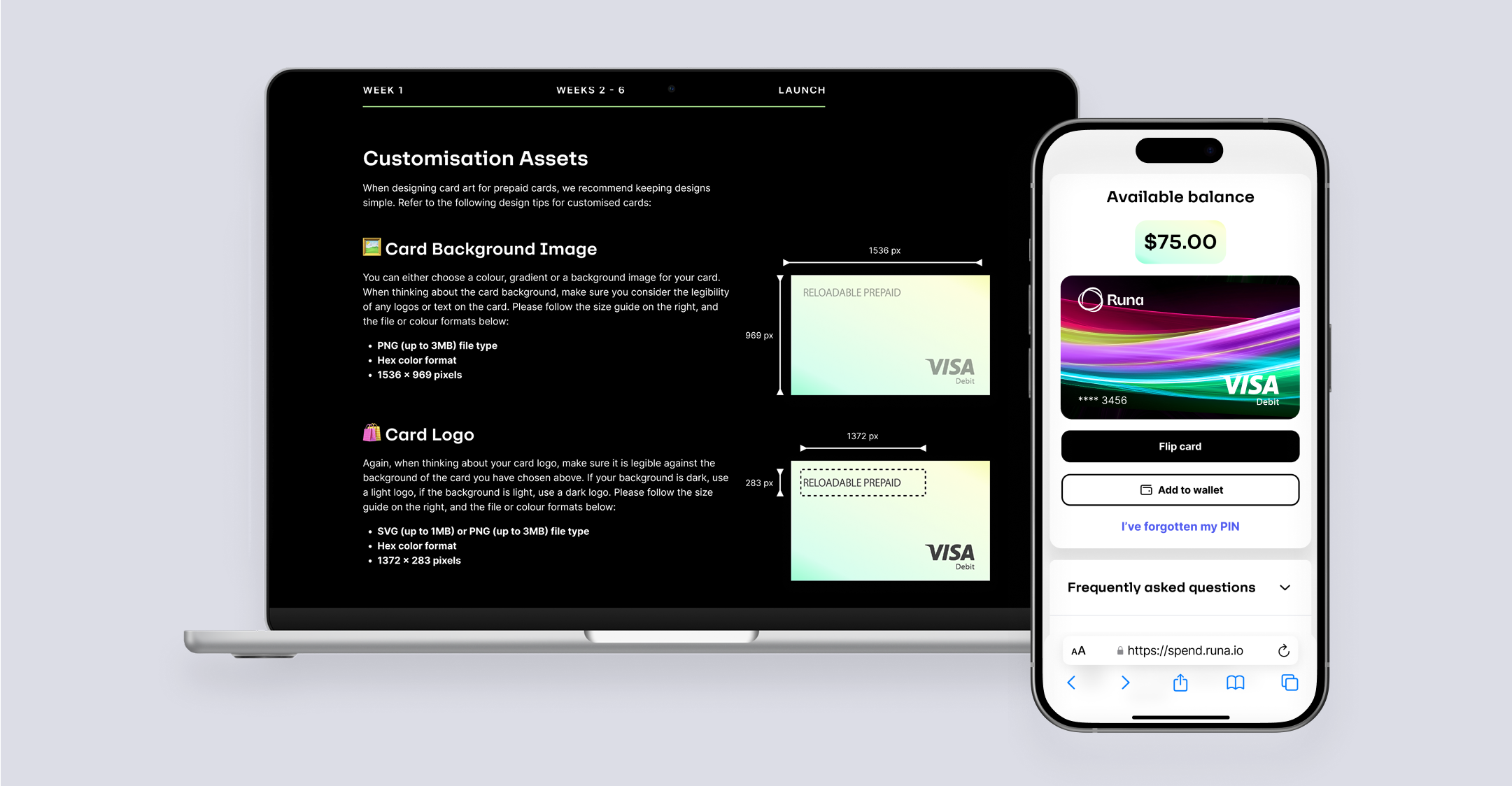
Card customisation in API docs and user flow
Support Processes
Since our CX team is currently only 5 people, I worked closely with them to design scalable support systems for launch.
I ran a workshop with engineering and our CX team to work out which processes could be handled through messaging in the user journey, and which would need to be handled by CX. Lastly, I designed new flows for our CX support chat bot related to reloadable prepaid cards. This would help to catch any issues that could be handled without CX help before they filtered through to the team.
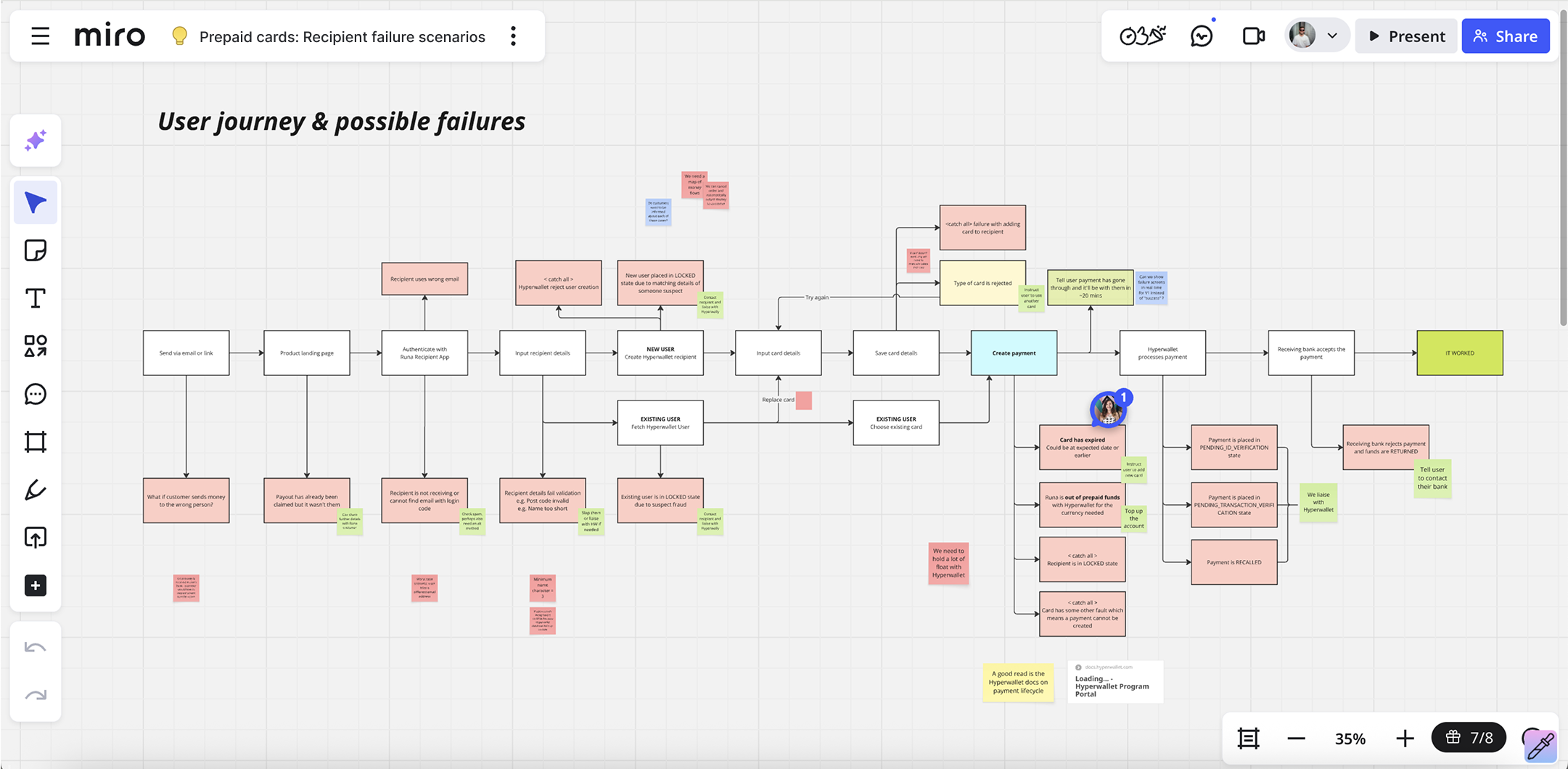
Miro board with CX support flows
MVP and Further Iterations
The MVP for reloadable prepaid cards was taken from conception with the first stakeholder workshop to production testing with our first customer in 6 weeks. The first iteration gave customers the ability to customise their prepaid cards and send them to their users.
The first fast follow after launch was to add functionality so that customers could reload their recipients prepaid cards without the user needing to take any action. For V1, the user would need to click on a link the customer sent them in order to trigger a reload. This was descoped for V1.
Sales Enablement features
For future iterations of our payment products, the sales team needed help showcasing the value and the customisable experience for their existing customers and prospects.
I was able to use Figma make to create a one-stop-shop where our internal teams could demonstrate how our payout experiences would work with a customers branding.
Payment Flows - link
Results and Conclusions
Since launch, Runa has issued more than 100,000 reloadable prepaid cards to customers, currently generating ~$600,000 per year.
We have also been able to piggy back off this piece of work and have recently launched our Pay to Debit Card offering, using the same Authentication, KYC and support flows designed for this project. This has allowed Runa to target customers in new verticals, and has directly contributed towards a sales pipeline of nearly $1 billion which Runa hopes to capitalise on in 2026.
Other projects
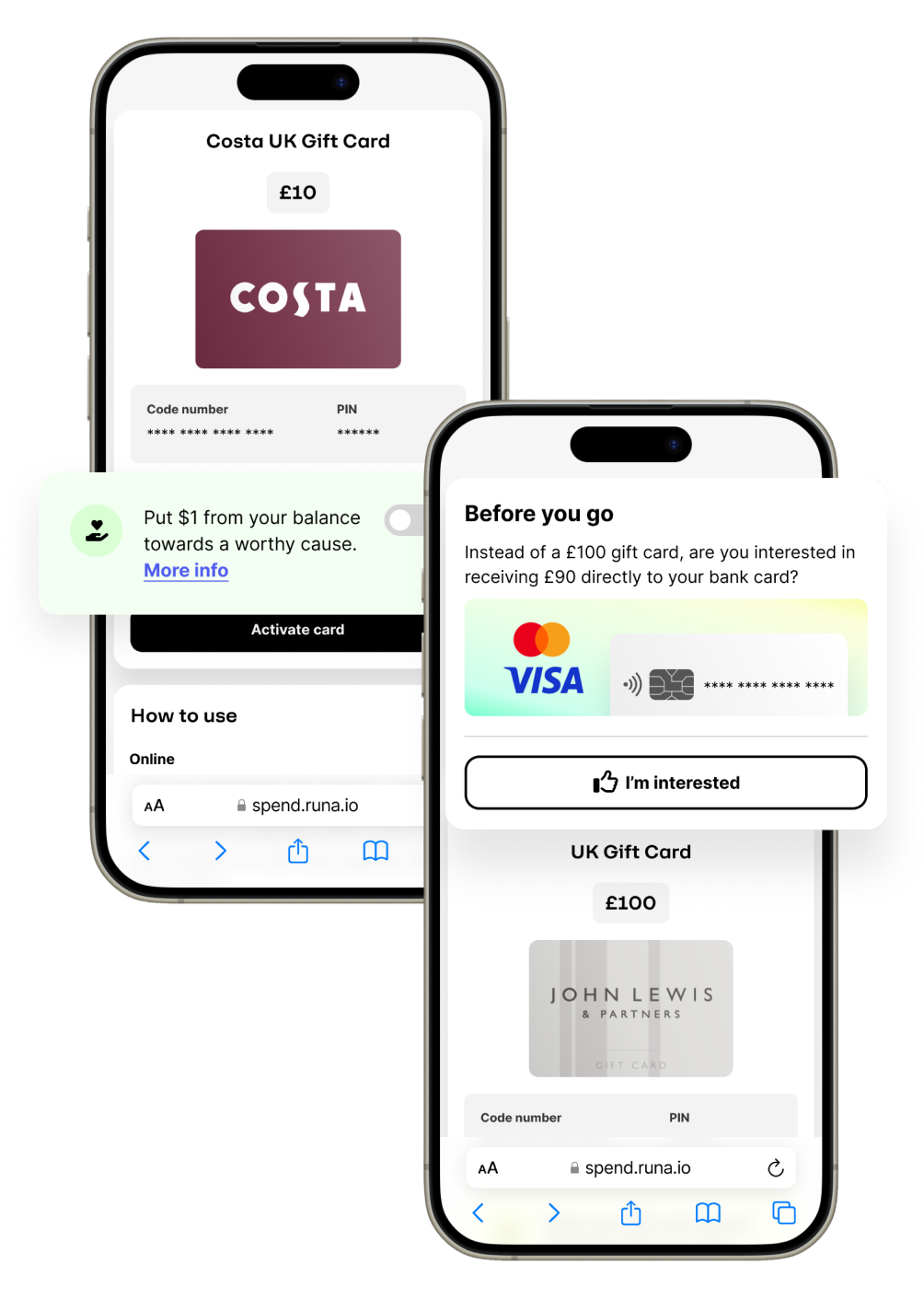
Creating a culture of experimentation
How I helped to implement a culture of experimentation in a historically risk adverse B2B payments company.
See more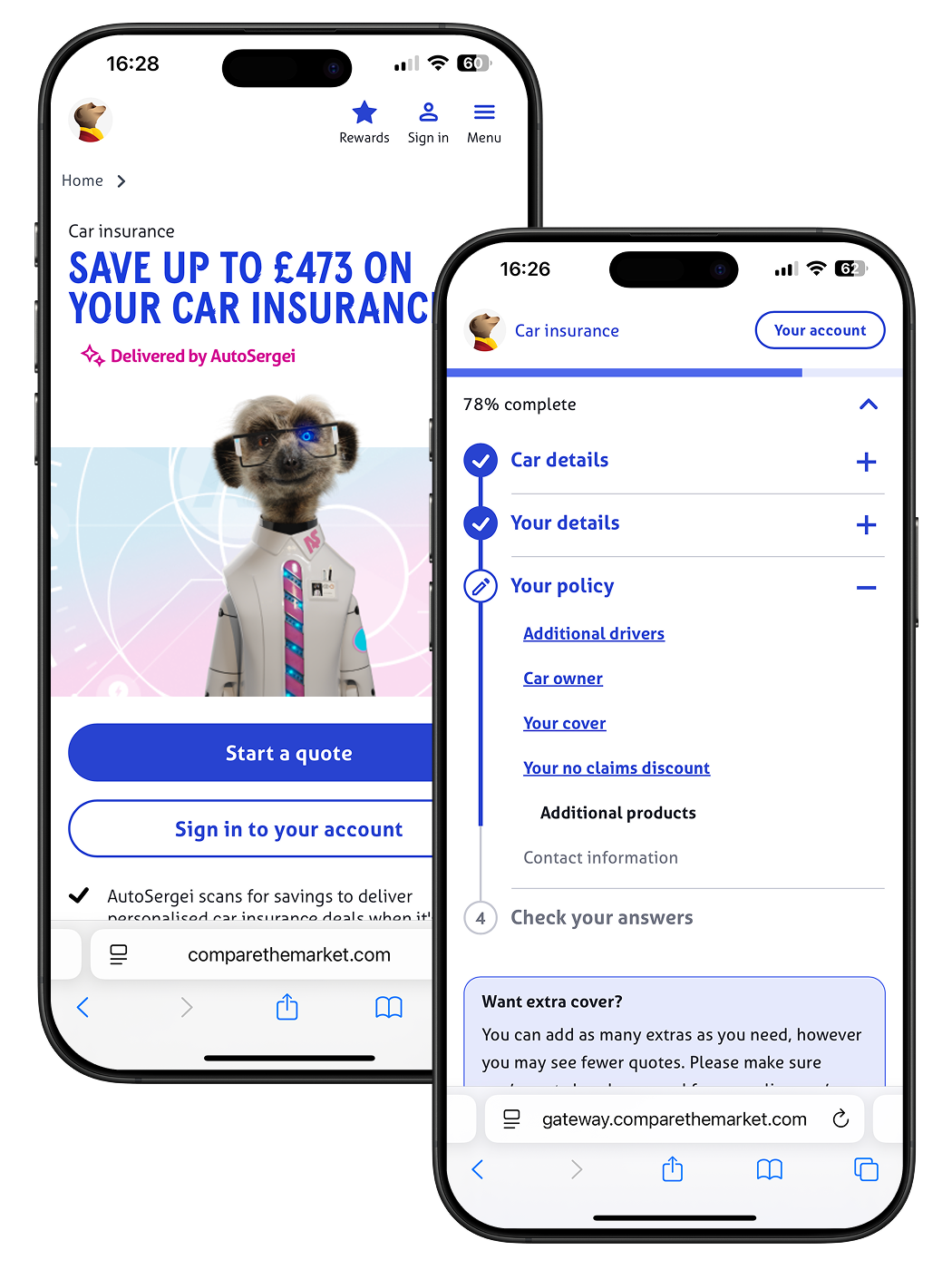
Designing accessible car insurance forms
How does the structure of a car insurance form impact the actual time taken, perceived time taken and ease of use for all user types.
See more